|

Author's Bio: Antonio Faillace
Antonio is a huge Disney fan since childhood and has been playing trading card games from a very young age. Therefore, Disney Lorcana was the perfect combination for him. Since the game's release, Antonio has been passionate about Disney Lorcana and has shared that passion with the Brazilian player community through his articles.
|
Hello, everyone!
Over the past few weeks, we’ve brought you
reports and analyses of decks and results from the
July São Paulo DLC.
As we mentioned in our
report (which you can check out
at this link), the DLC was held in the
Core Constructed format, which is currently the format that has an annual set rotation.
With the release of the 13th Set,
Attack of the Vine!, some sets are no longer legal in the format, specifically the “older” ones:
• 5: Shimmering Skies
• 6: Azurite Sea
• 7: Archazia’s Island
• 8: Reign of Jafar Meanwhile, the sets released afterward remain legal. Until the next rotation, expected around mid-2027, no more sets will rotate out. New sets will simply be added to the format as they are released:
• 9: Fabled
• 10: Whispers in the Well
• 11: Winterspell
• 12: Wilds Unknown
• 13: Attack of the Vine! With that in mind, in today’s article we’ll take a look at some trends and see how the next competitive
metagame is shaping up, while also preparing for what we can expect to see in action at the
Brazilian Championship, taking place on September 19!
IS IT AMBER’S TIME TO SHINE?
Throughout the history of
Disney Lorcana, we’ve seen many dominant decks. A good example would be the recent success of
Amber-Emerald Dogs, which established one of the strongest archetypes in the previous
Core Constructed format and is currently also enjoying great success in the
Infinity format (where all released sets are legal).
Periods in which we saw a particular
ink color establish such a strong level of dominance have been much rarer, but they have happened.
Sapphire, for example, had an incredibly powerful period within the game, to the point that we saw the first card ban in the game,
Hiram Flaversham - Toymaker.
At the moment, what we’re seeing in events following the release of
Attack of the Vine! is a strong presence of
Amber at the top of competitive results.
Amber currently seems to concentrate several important tools that influence how the best
Disney Lorcana decks are built, so it’s no surprise to see the ink getting so much attention.
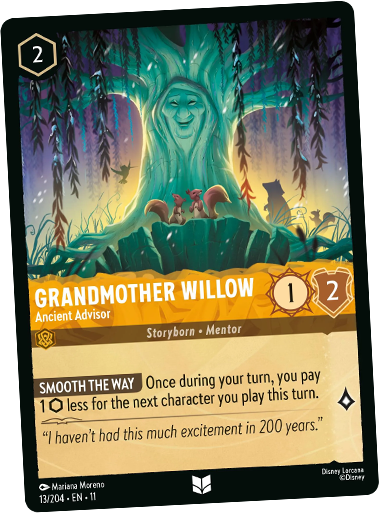
The ink can accelerate plays with cards such as
Grandmother Willow - Ancient Advisor and
Akood et Emuti; control the board with cards such as
Raging Storm and
World’s Greatest Criminal Mind; and generate additional resources, mainly by drawing cards or returning cards from the discard, with cards such as
Sulley - The New Boss and
Webby’s Diary.
The biggest highlight, of course, is the combination of
Amber and
Emerald, the combination that was previously led by the “
Dog Decks” we analyzed here on the blog (
check it out at this link).
Even though it lost the “Dogs” in the rotation, the
Amber-Emerald core of fast characters, cost reducers, and characters that generate additional card advantage continues to produce plenty of wins around the world.
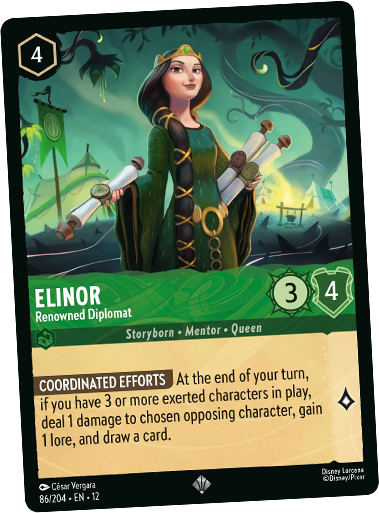
One card that has certainly stood out in these results is
Elinor - Renowned Diplomat.
Normally, filling the board with small characters can be a disadvantage, because if your opponent has a way to deal with your board quickly, you can run out of resources.
Elinor directly addresses this issue, making it so that not only can your opponent’s characters take damage, but you can also potentially draw an additional card every turn.
When it comes to board control, however,
Emerald also has some powerful tools, such as
Under the Sea and the devastating combination of
Malicious, Mean, and Scary + Prince Phillip - Vanquisher of Foes.
The latter allows the entire
opponent’s board —
and only the opponent’s board — to be sent to the discard when
Prince Phillip enters play and resolves his effect, ideally after a previous play of the song
“Malicious, Mean and Scary.”
“TOYS” AND “ROBOTS”!
Another important factor whenever a rotation takes place is the
viability of archetypes that have not yet had their time in the spotlight, but that may emerge in a new format.
In this section, we’ve already identified two possible new paths, both based on the 12th Set,
Wilds Unknown.
The “Toys” archetype is built around an aggressive/fast deck that could find a great deal of success if it gets the right opportunity within the
metagame.
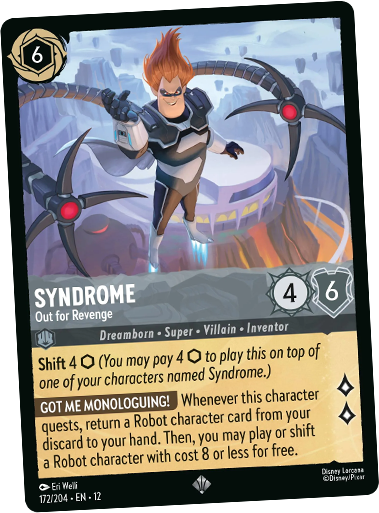
On the other hand, we have the “Robots” of the villain
Syndrome, which also form their own archetype. With the help of
Syndrome - Out for Revenge, it is possible to continuously control the board without ever running out of “Droids” to bring back.
It’s worth remembering that the cards mentioned above are possible ideas based on the events of the current season and their results. Therefore, in a new format such as
Core Constructed, the best approach will always be to test your own deck and develop it accordingly.
FORGOTTEN BLUE SHINE?...
As mentioned earlier,
Sapphire reached such a high level of power that a nearly unprecedented ban in the game (
Hiram Flaversham - Toymaker) was necessary to bring the inks back into balance.
Even after the ban, the ink remained a major reference point because it concentrated essentially all of the game’s
ink acceleration tools, such as
Sail the Azurite Sea.
However, all of these acceleration tools were lost in the rotation, bringing us back once again to the point made earlier about
Amber: it is an ink that can “do everything,” even allowing you to divide your characters between Lore generators, cost reducers, and board control.
It is therefore clear that
Sapphire appears to be in a less prominent position within the format, which in some ways creates very important challenges for the game’s design.
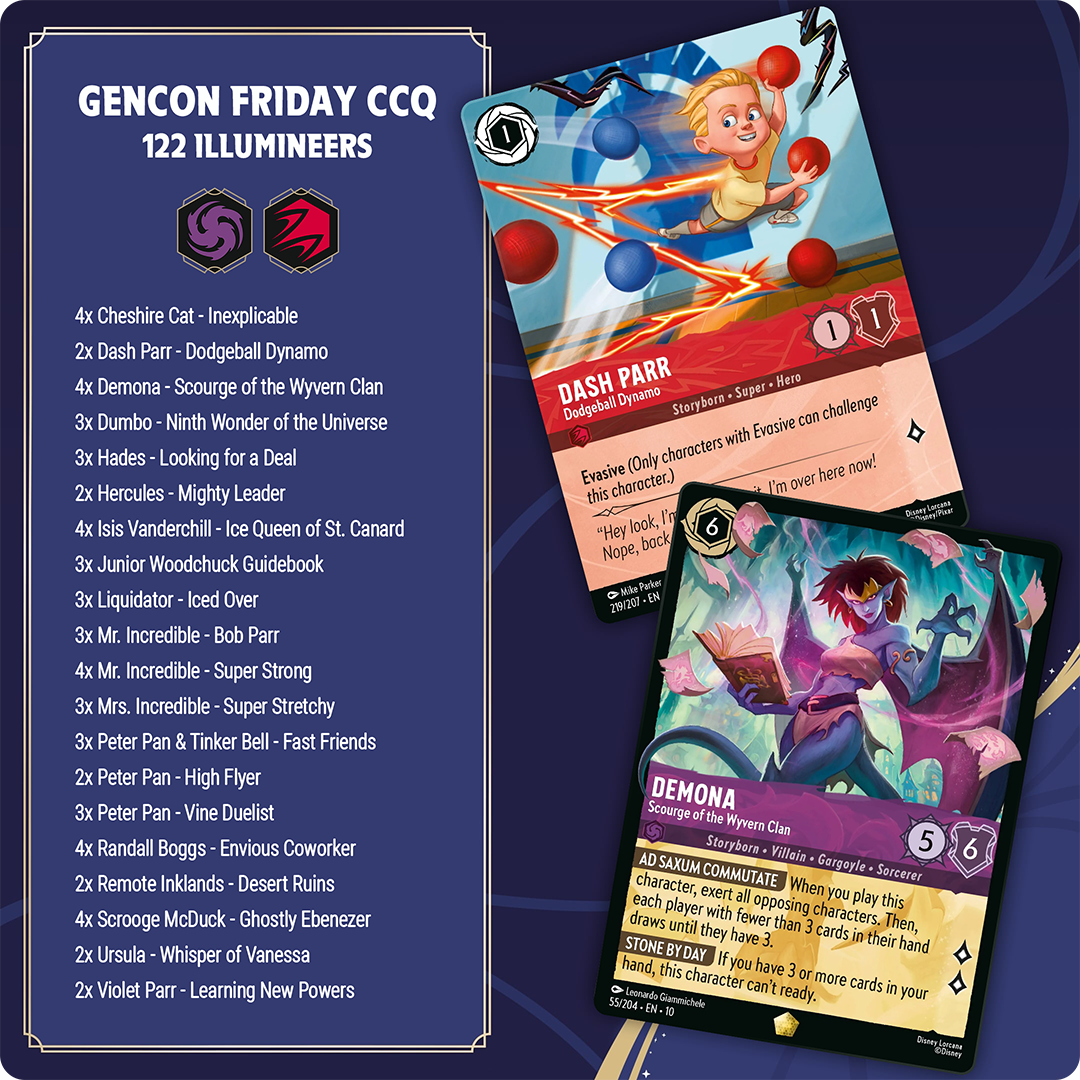
A LIST IDEA: AMETHYST/RUBY
The
Amethyst-Ruby combination recently found success at a tournament held during
GenCon, in the United States.
It won an event with
more than 120 Illumineers, bringing forward yet another decklist that wasn’t on many players’ radars.
CONCLUSION
And with that, we’ve reached the end of our look back at the
Core Constructed format, already preparing for the September event!
As we’ve seen, the format following the release of
Attack of the Vine! is constantly evolving, with archetypes trying to establish themselves while responding to threats from other decks and incorporating those answers into their own strategies.
There still isn’t a deck that we can confidently point to and say: this is the
best deck in the format.
In other words, for those who are more focused on deckbuilding and enjoy exploring different ideas and discussing various options for their decks, the ideal approach is to
take advantage of this more “open” metagame and test out as many different things as possible.
After all, what if you end up finding the key deck for the next World Champion? Woohooo!!!
I hope you enjoyed it! Follow the blog for more news, information, and deck analyses!
See you next time!